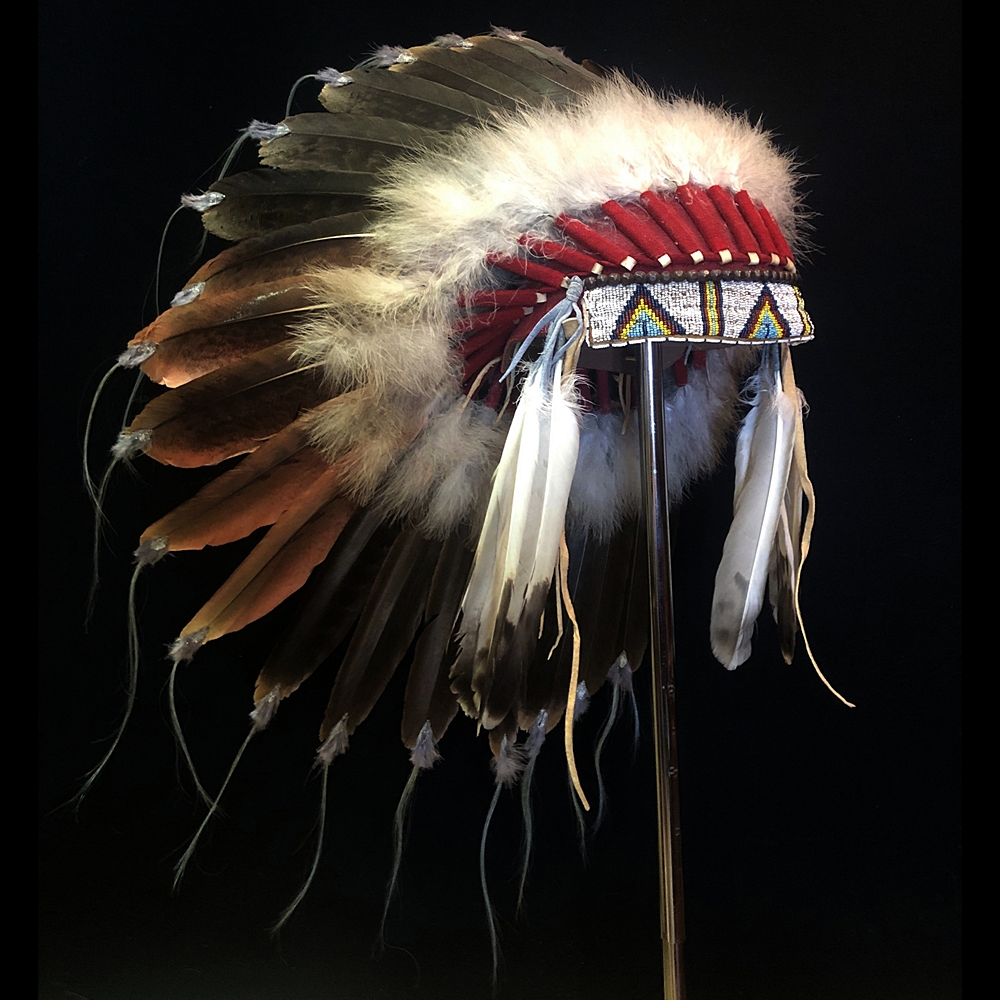
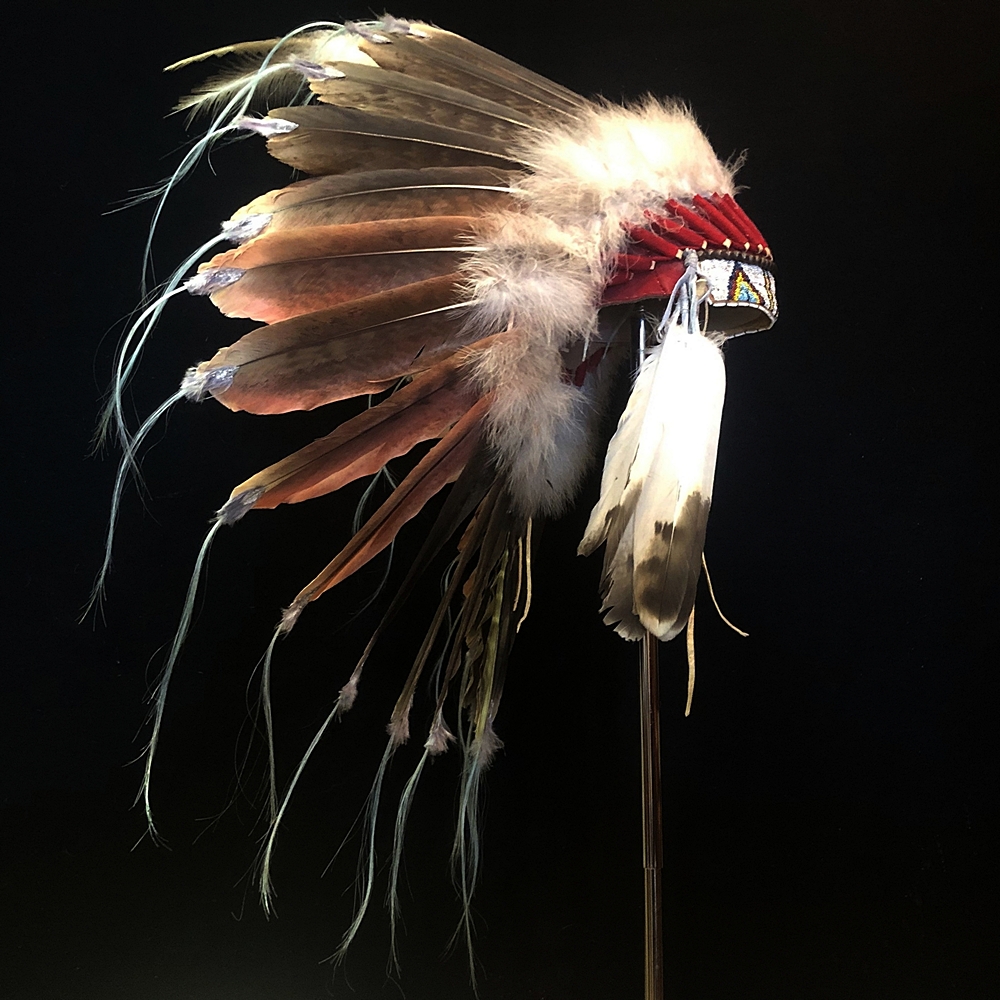
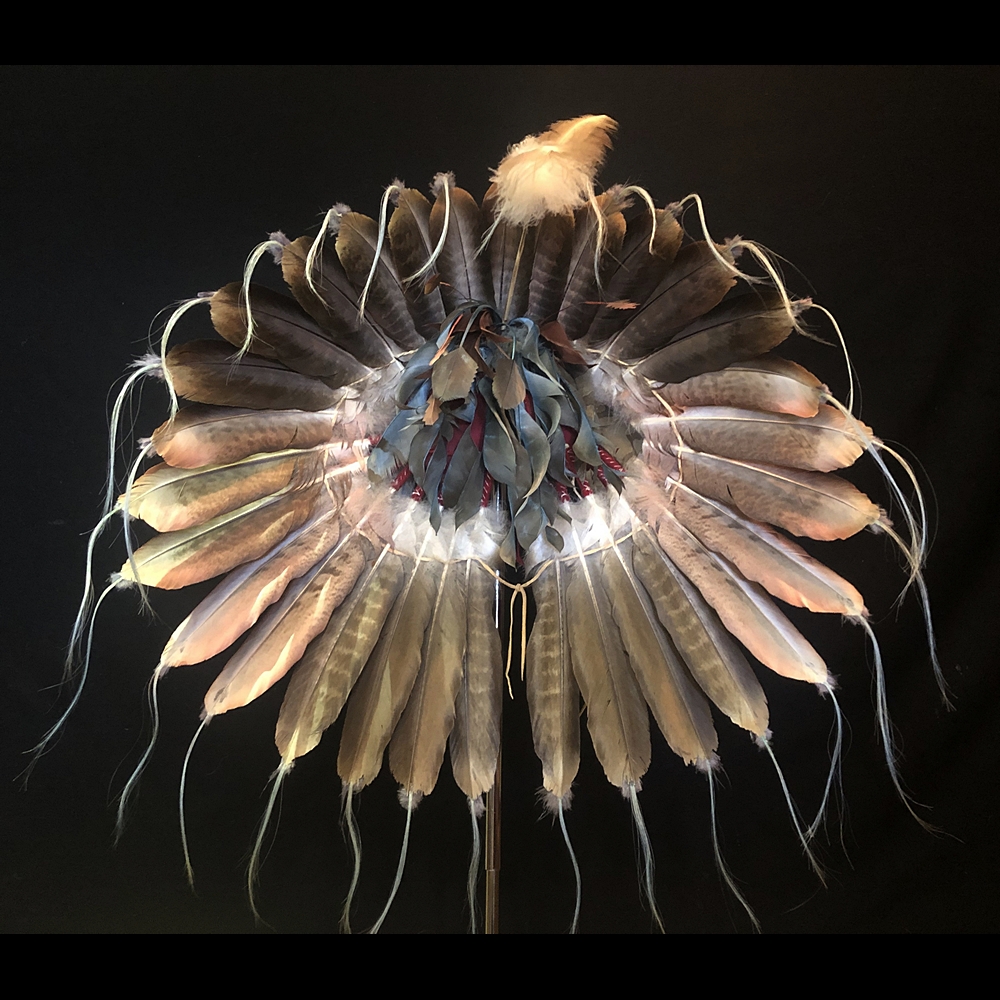
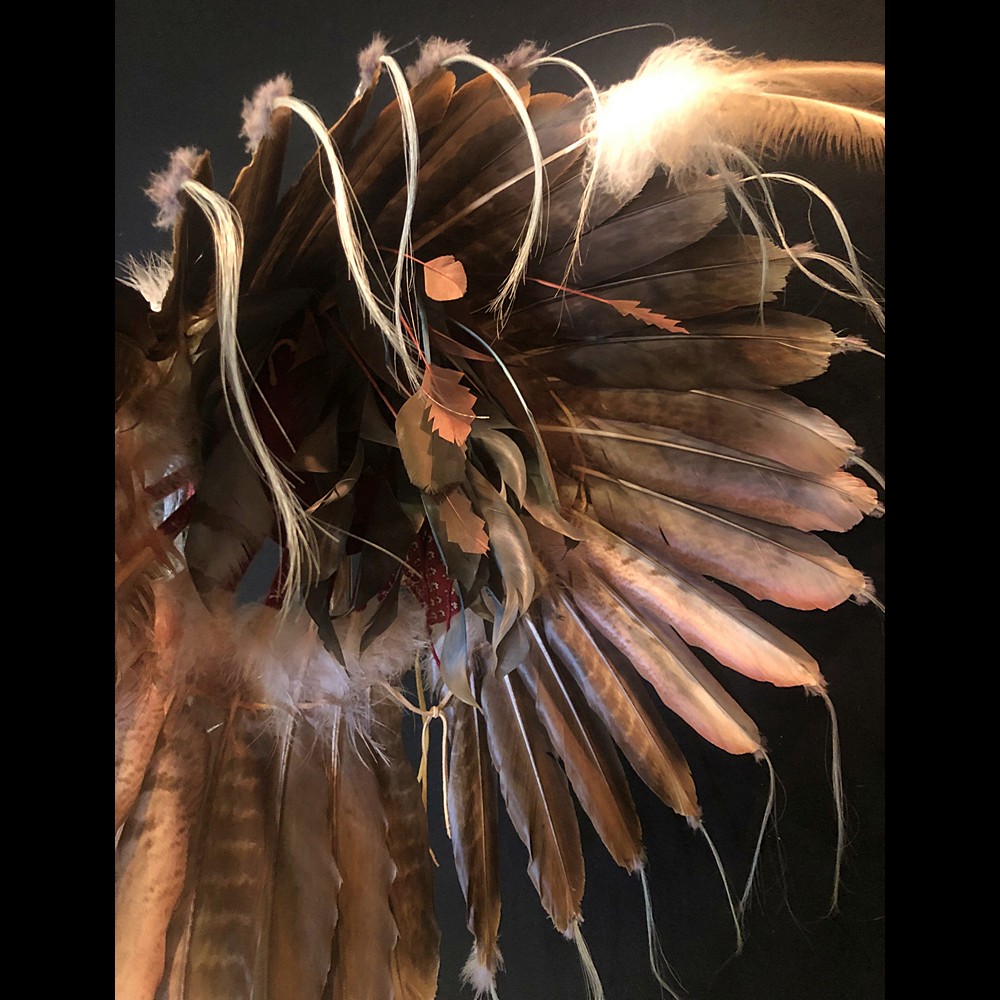
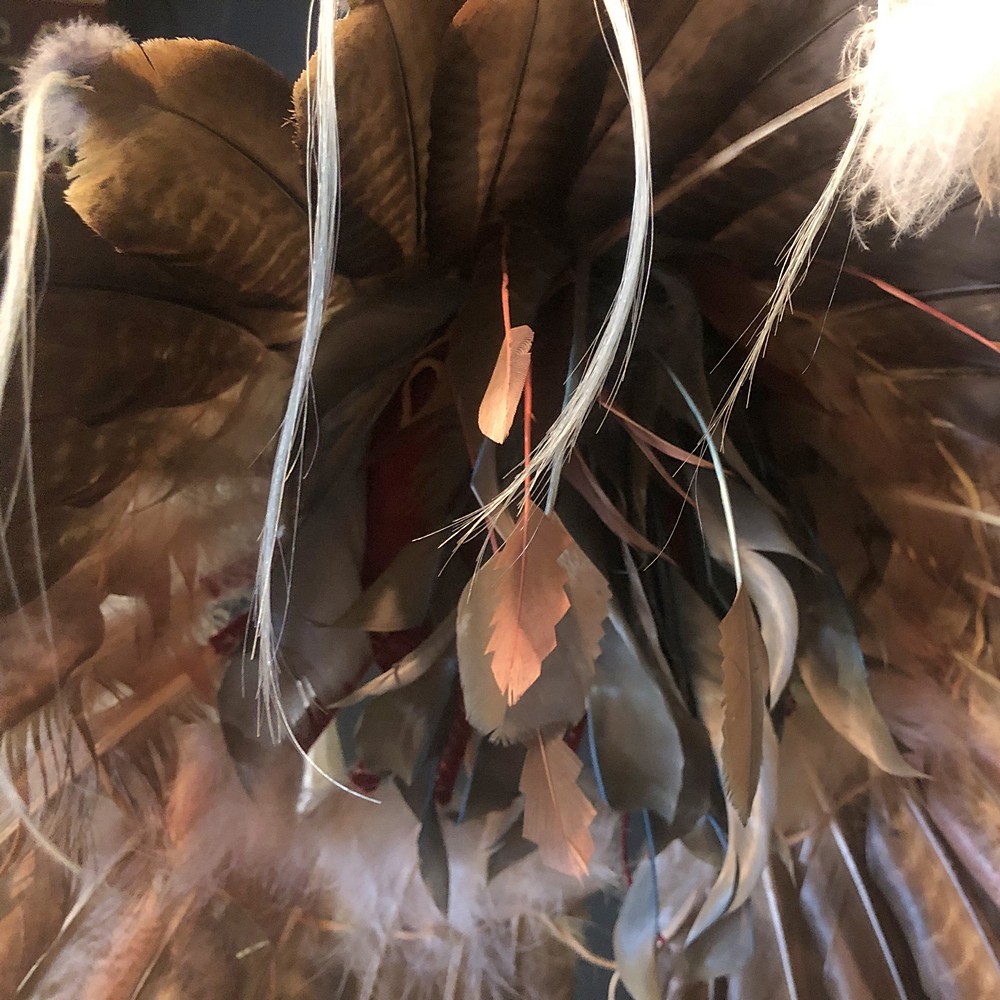
This war bonnet, constructed from 32 natural steppe eagle feathers, is the result of painstaking manual reconstruction embodying the traditions of the Indian Territory (present-day Oklahoma) tribes. In creating this piece, I relied on authentic archival specimens, paying close attention to rare, historically accurate materials—from eagle primaries and tail feathers to rough-legged hawk plumage and pure wool trade cloth. A final, delicate distressing process lends the regalia the character of an original 19th-century museum artifact. A singular, non-serial work for a discerning collector.
Work Grade:Commercial Replica
Availability:
In stock
Поделиться ссылкой |
Description
Details
My sidenotes
Leave / Read comment
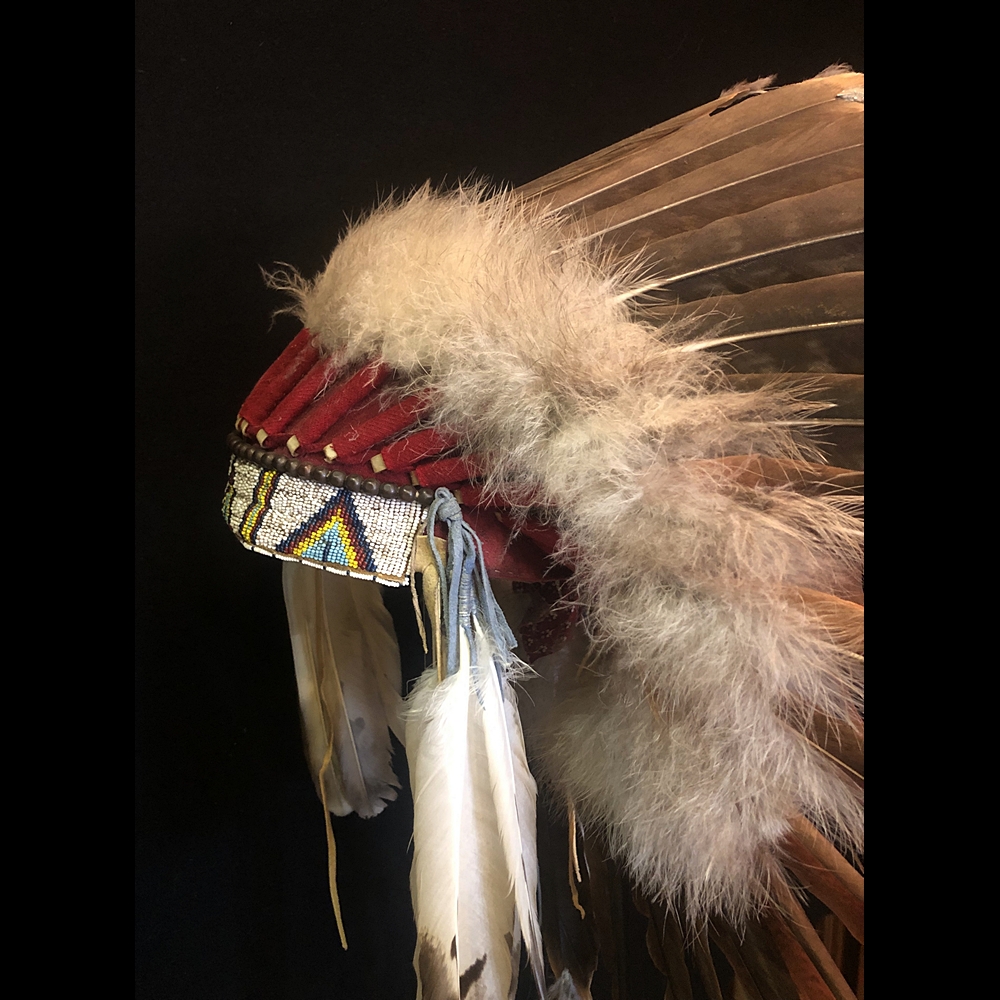
The crown of this bonnet is composed of 32 natural feathers of a large steppe eagle, including both tail feathers and primaries (first-order flight feathers) stained with red pigment—five on each side. The feather quills are wrapped with patches of 100% wool red trade cloth
Clarification for the Uninitiated:
Whenever I mention that a component or item is made with 100% wool cloth, I mean an authentic reproduction of pure English wool white-selvedge broadcloth, traded to Indigenous peoples since the 17th century. To be clear, this is not modern army uniform cloth or cheap, polyester-laced junk dyed with synthetic chemicals that is sold everywhere. It is an expensive, scarce textile with a very specific historical weave, colored strictly with natural dyes.
It is not produced in Russia and can only be tracked down through two or three specialized reenactor sources in the US and Western Europe. At times, it disappears from the market completely for years, and under current circumstances, sourcing it has become virtually impossible. Moreover, I never use this wool in its pristine, off-the-roll state—I subject it to a long, painstaking distressing process to bring out its underlying weave, so that the finished regalia mirrors a genuine 19th-century museum specimen.
, while their bases are adorned with white fluffs. Using traditional Indian rawhide«Rawhide» is a traditional, un-tanned animal hide that has been de-haired, scraped, and dried under tension, serving as a primary structural material in Plains Indian material culture. Renowned for its exceptional rigidity when dry and extreme flexibility when wet, rawhide was extensively utilized for making shield covers, parfleches, container boxes, and structural reinforcing loops for feathered war bonnets. loops and a leather thong, the feathers are secured to a feltAuthentic, period-correct dense wool or fur felt matching 19th-century trade standards. Acquired by Plains and Plateau tribes through the fur trade and used for modified hats, war bonnet crowns, and regalia foundations. skull cap covered in genuine leather.
The browband features four-row lazy-stitch beadwork displaying a geometric pattern of triangles and transverse-longitudinal stripes in a color palette characteristic of the Indian Territory (present-day Oklahoma). Positioned on the sides are clusters of tail feathers from a rough-legged hawk. The surface of the cap behind the main crown is decorated with a Major Feather and a plume of small turkey and eagle feathers.
A historical reconstruction of a turn-of-the-century Indian Territory headdress combining beaded browbands, rough-legged hawk tail feathers, and ritually crimson-dyed Red Eagle feathers symbolizing battle honors or spiritual connection. The crafting process involves months of selecting 32 natural Steppe Eagle feathers and careful patination to achieve an authentic antique look.
Selecting and matching 32 natural Steppe Eagle feathers for uniform size, curve, and hue is a painstaking process that takes months of careful sorting. Final patination demands an equally delicate touch: stripping away the fresh look of new thread, leather, and trade cloth while preserving the natural resilience and texture of each plume so the headdress reads as an authentic late 19th-century regalia piece.
Funny thing is that this year 86 gawkers aimlessly stared at this namerican beauty “War bonnet”, couldn't bring themselves to buy this Native American piece, and didn't even like, share, bookmark, or leave a single comment!!!
It is forbidden to copy and / or otherwise use content from the «War bonnet» without a direct active and indexed hyperlink to the original in the form: "Source: Maza Sapa's Gallery of Plains Indian Warrior Art — https://en.4colors.ru/nam3030.html".