Gallery Rooms
No documents found.
|
Home » War regalia » War bonnets
War bonnets
Handcrafted historical reproductions of 19th-century Plains Indian eagle-feather war bonnets. Beyond serving as a public record of battle deeds (coups) and leadership rank, the feathered war bonnet was understood to carry spiritual protective power in combat.
|
|
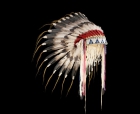
Cheyenne Feather War Bonnet (replica)
SKU: 4062.09.01
Museum quality reproduction of the Cheyenne style feather war bonnet handcrafted by brilliant American Plains artists Bill and Kathy Brewers in 2009. Not for sale..
More details
|
|
|
|
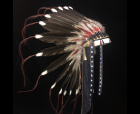
War Bonnet with a cloth trailer
SKU: 3011.21.01
An authentic reproduction of a turn-of-the-century Cheyenne war bonnet, handcrafted by me in 2021. This halo-style headdress features a crown of 28 vulture feathers paired with a short blue trade-cloth trailer decorated with white stars, reflecting the austere warrior aesthetics of the Southern and Northern Plains.…
More details
|
|
|
|
|
War bonnet
SKU: 3030.23.01
This war bonnet, constructed from 32 natural steppe eagle feathers, is the result of painstaking manual reconstruction embodying the traditions of the Indian Territory (present-day Oklahoma) tribes. In creating this piece, I relied on authentic archival specimens, paying close attention to rare, historically accurate materials—from eagle primaries and tail feathers to rough-legged hawk plumage and pure wool trade cloth. A final, delicate distressing process lends the regalia the character of an original 19th-century museum artifact. A singular, non-serial work for a discerning collector.
.
More details
|
|
|
|
Plains Indian Eagle-Feather War Bonnets: Symbolism & Craft
Among the equestrian nations of the 19th-century Great Plains, the eagle-feather war bonnet functioned both as a formal emblem of martial distinction and as a spiritual safeguard in battle. Constructed from Golden Eagle tail feathers, winter ermine pelts, seed beadwork, and porcupine quillwork, each straight-up, flaring, or trailer bonnet was earned through documented war honors (coups) and worn only with the formal consent of fellow warriors and tribal leaders.
Reconstructing a 19th-century Buffalo Days war bonnet to archival standards requires strict adherence to period materials and specialized indigenous techniques that differ fundamentally from modern commercial Pow-Wow production. Every headdress cataloged in the «4 Colors» Gallery is handcrafted using traditional methods—including proper feather preparation and quill splitting, brain-tanned hides, fur assembly, lazy-stitch beadwork, porcupine quillwork, sinew sewing, and controlled, multi-stage patination—to replicate the proportions, weight, and surface character of documented museum specimens.
|
No documents found.
|