


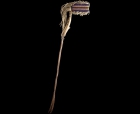
Among the equestrian tribes of the 19th-century Great Plains, the riding quirt was an essential piece of horsegear carried suspended from the rider's wrist during buffalo chases, travel, and combat. Structurally, a traditional Plains quirt consisted of a short, rigid handle—fashioned either from a section of shed elk antler or carved from dense hardwood such as ash or hickory—fitted with a double-thong lash of heavy rawhide or bridle leather and a wide, looped wrist strap.
Across Northern, Central, and Southern Plains nations, quirts were frequently embellished according to regional traditions: handles were studded with trade brass tacks, incised with personal tally marks, or carved with saw-tooth edges, while wide deer-hide wrist straps were decorated with lane-stitched glass seed beadwork, porcupine quillwork, river otter fur, and hand-cut leather fringe. Beyond their practical role in urging a war horse forward without losing grip of the weapon hand, specialized quirts also served as official insignia of office for whip-men and leaders within military sodalities such as the Lakota Cante Tinza and Blackfeet Kaispa.
The reproductions cataloged in this section of the «4 Colors» Gallery replicate documented 19th-century museum specimens in proportion, sinew-sewn construction, and controlled surface patination.


