


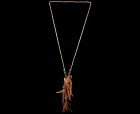

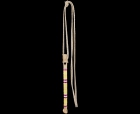
In addition to large, multi-layered medicine bundles, 19th-century Plains warriors relied on individual protective objects—categorized collectively in museum ethnography as war charms and medicine pouches—worn directly on the body or fastened to weapons and horsegear in combat. Conceived through vision quests or acquired from recognized spiritual practitioners, these compact items encompass three closely related functional concepts:
- Amulets: Natural or minimally shaped items believed to offer passive defense by turning aside bullets, arrows, and misfortune through their inherent spiritual properties—such as sacred stones, grizzly bear claws, raptor talons, and beaded turtle or lizard umbilical charms;
- Talismans: Consecrated ritual objects fashioned to actively confer specific guardian powers in battle, such as swiftness or keen sight—including stuffed swallow, kingfisher, or hawk skins tied into the scalp lock or onto a war shield, as well as incised or painted sacred emblems;
- Medicine Pouches & Bags: Closed containers fashioned from brain-tanned buckskin, painted rawhide (wawoyake), or wool trade cloth that house concealed sacred substances—such as dried roots, sweetgrass, mineral earth pigments, or soil gathered from a vision site.
Within this Gallery's classification, standalone charms and pouches suspended on a simple buckskin thong or accented with a few large trade beads are cataloged in this section, whereas multi-strand beaded necklaces incorporating amulet pendants are classified under Necklaces. The reproductions presented here replicate documented 19th-century museum specimens in material, proportion, and traditional construction.


