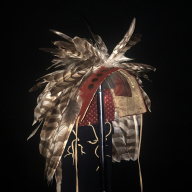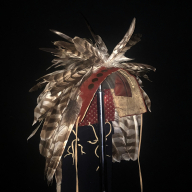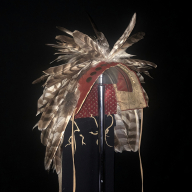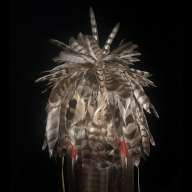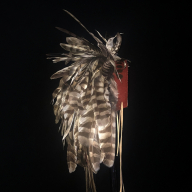

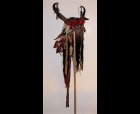
In the warrior cultures of the North American Plains, nearly every feathered headdress was understood to carry spiritual efficacy through its raptor plumes. However, ethnographers and tribal elders draw a clear distinction between standard war bonnets—which functioned as rank-specific insignia of warrior societies or public records of battle honors (coups)—and individualized Medicine Bonnets (known among the Lakota as Wapaha Wakan), defined by several characteristic features:
• Vision-Conceived Origin: Unlike society regalia governed by formal brotherhood rules, a medicine bonnet originated in a warrior's personal dream, vision quest, or ritual transfer. Its exact feather count, colors, and asymmetrical layout were dictated by guardian spirits rather than military convention.
• Natural & Animal Power Items: Alongside visual elements such as pronghorn or buffalo horns, rattlesnake skins, and whole raptor or weasel pelts, many feathered medicine bonnets incorporated specialized plumes (including hawk, owl, raven, or woodpecker feathers), trimmed or split quills, grizzly bear claws, and human hair locks.
• Hidden Medicine Bundles & Mineral Pigments: Beneath the crown or sewn directly into the apex of the skullcap lay concealed medicine bundles—small buckskin pouches containing sweetgrass, sage, tobacco, roots, or earth from the vision site—paired with earth-pigment paintings (red ochre, yellow clay, or lightning motifs) hidden beneath the feathers.
• Battlefield Protection & Ritual Taboos: Consecrated through smudging and personal medicine songs prior to combat, these headdresses served as spiritual shields intended to turn aside bullets and arrows while unsettling adversaries in battle.