


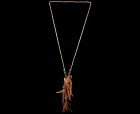

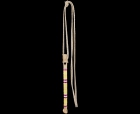
In the ethnography of the 19th-century Great Plains, personal spiritual safeguards (often grouped together in museum catalogs under the general term war charms) are divided into three distinct functional categories depending on how their protective power was believed to operate:
- Amulet — passive protection: A natural or minimally shaped object believed to deflect misfortune, bullets, and arrows simply by its presence—such as an unusually shaped sacred stone, a grizzly bear claw, a raptor talon, or a beaded turtle or lizard umbilical charm.
- Talisman — active power and invocation of aid: An object crafted or consecrated during a ritual to endow a warrior with a specific guardian quality (such as the keen sight of an eagle, the swiftness of a hawk, or invulnerability)—for example, a swallow or kingfisher skin tied into the hair or onto a shield, a painted hoop, or a carved charm bearing sacred symbols.
- Medicine pouch / bag — a closed container for medicine: A small bag fashioned from brain-tanned buckskin, rawhide, or trade cloth housing concealed sacred ingredients—such as soil gathered from a vision site, dried roots, sweetgrass, or mineral earth pigments—where the pouch itself serves as a protective vessel for its contents.
Worn suspended from a neck thong, tied into the scalp lock, or fastened to a war shield or bridle, amulets were acquired through personal vision quests or formal ritual transfers from experienced spiritual practitioners.


