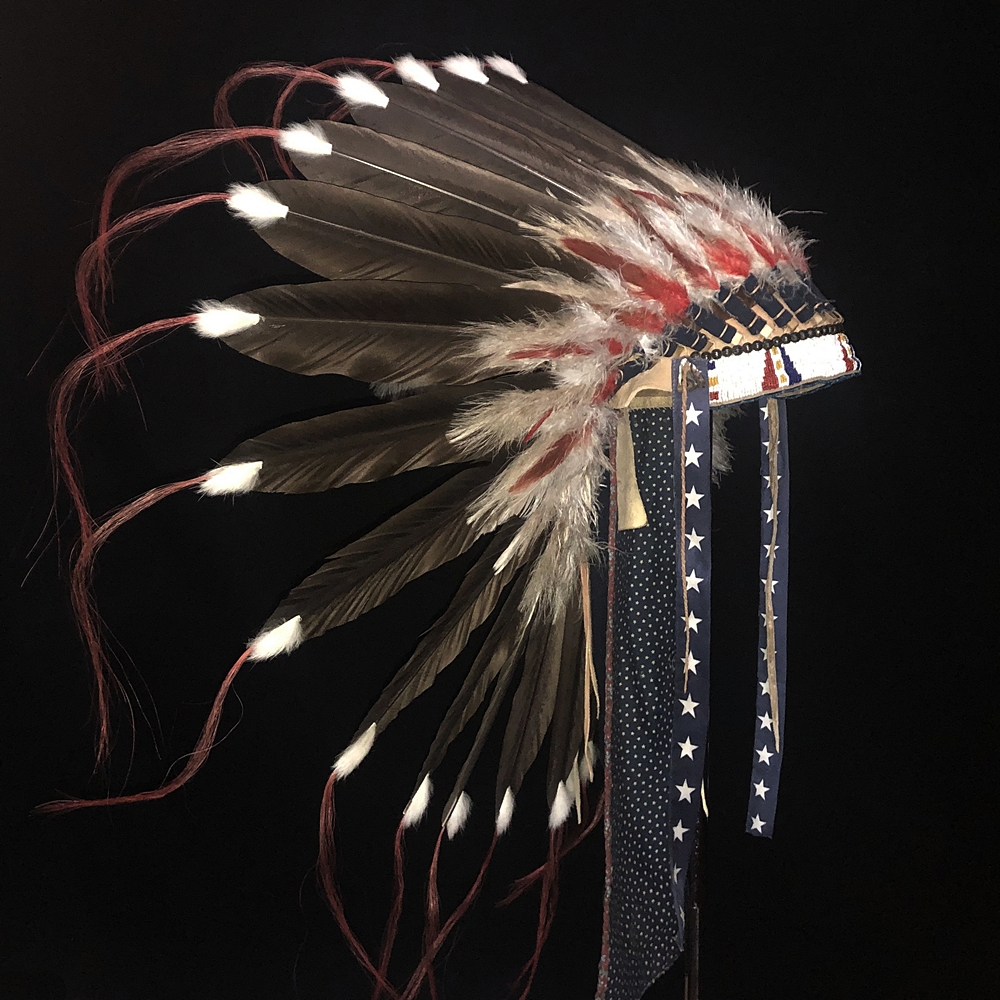
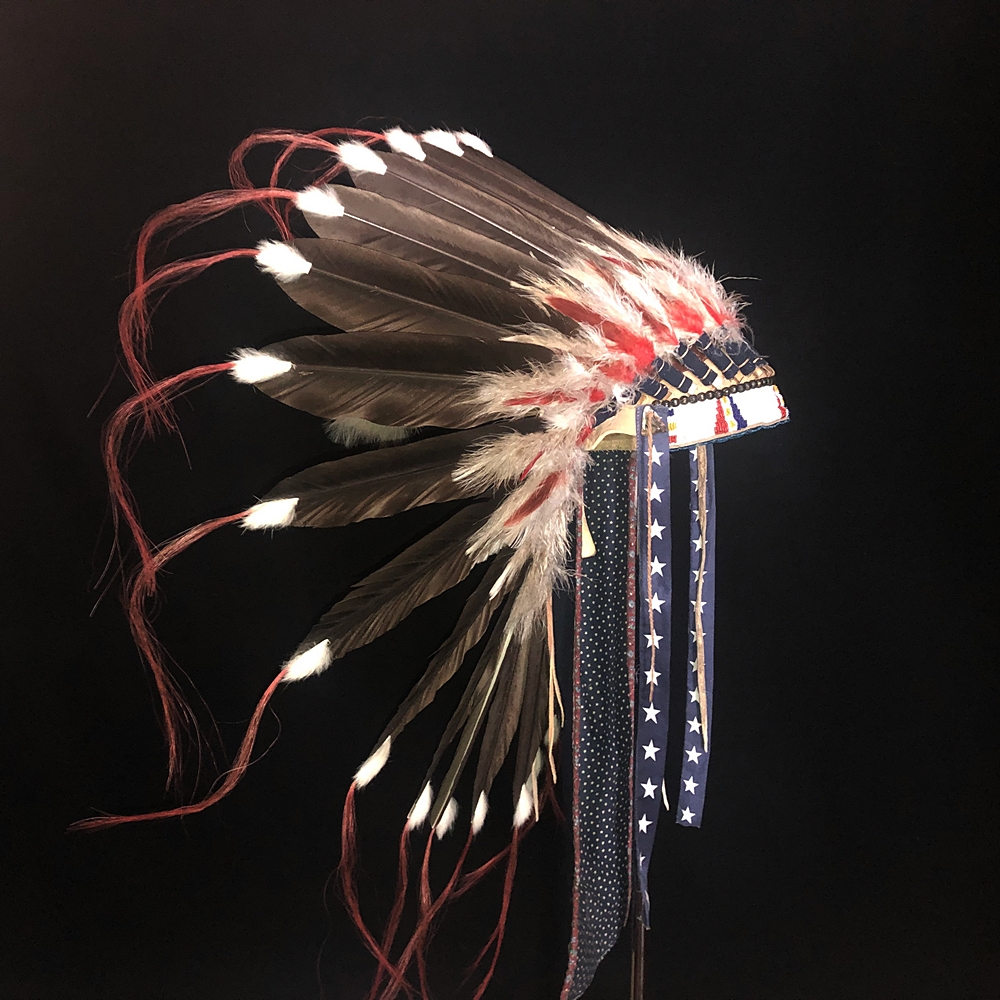
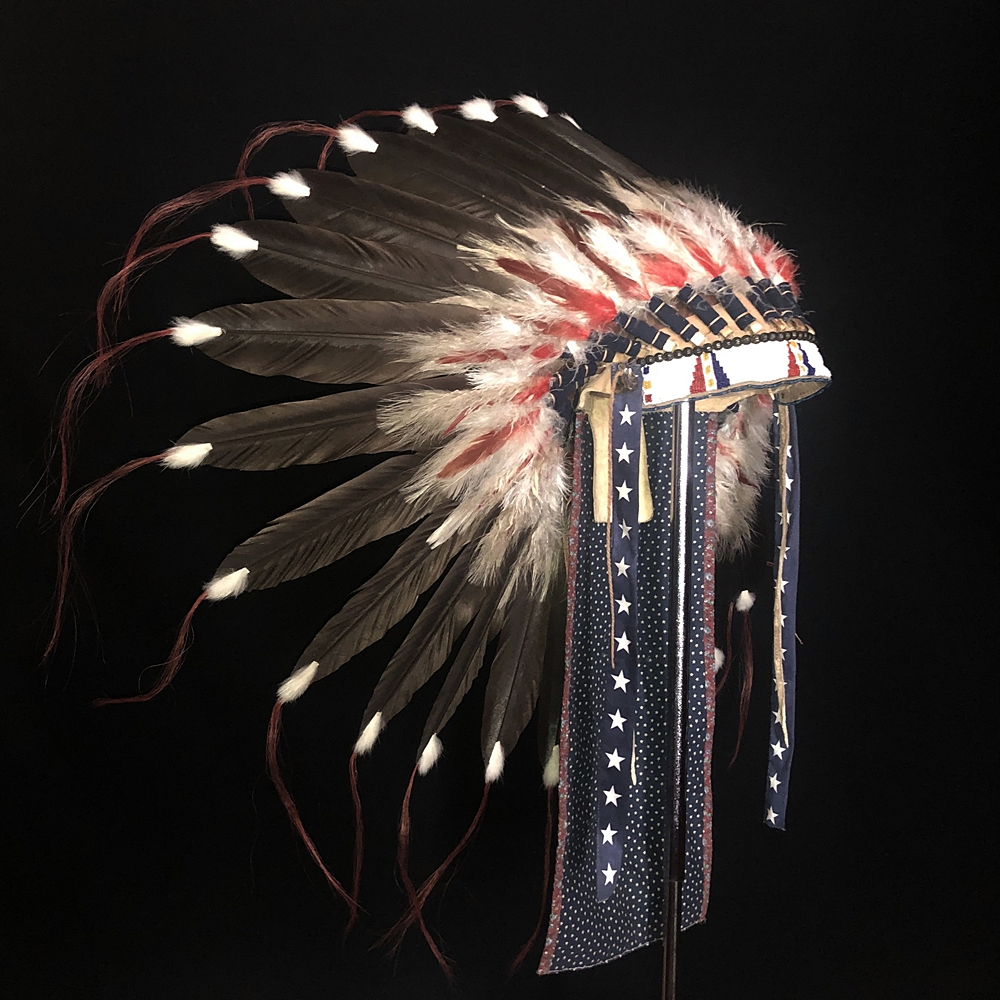
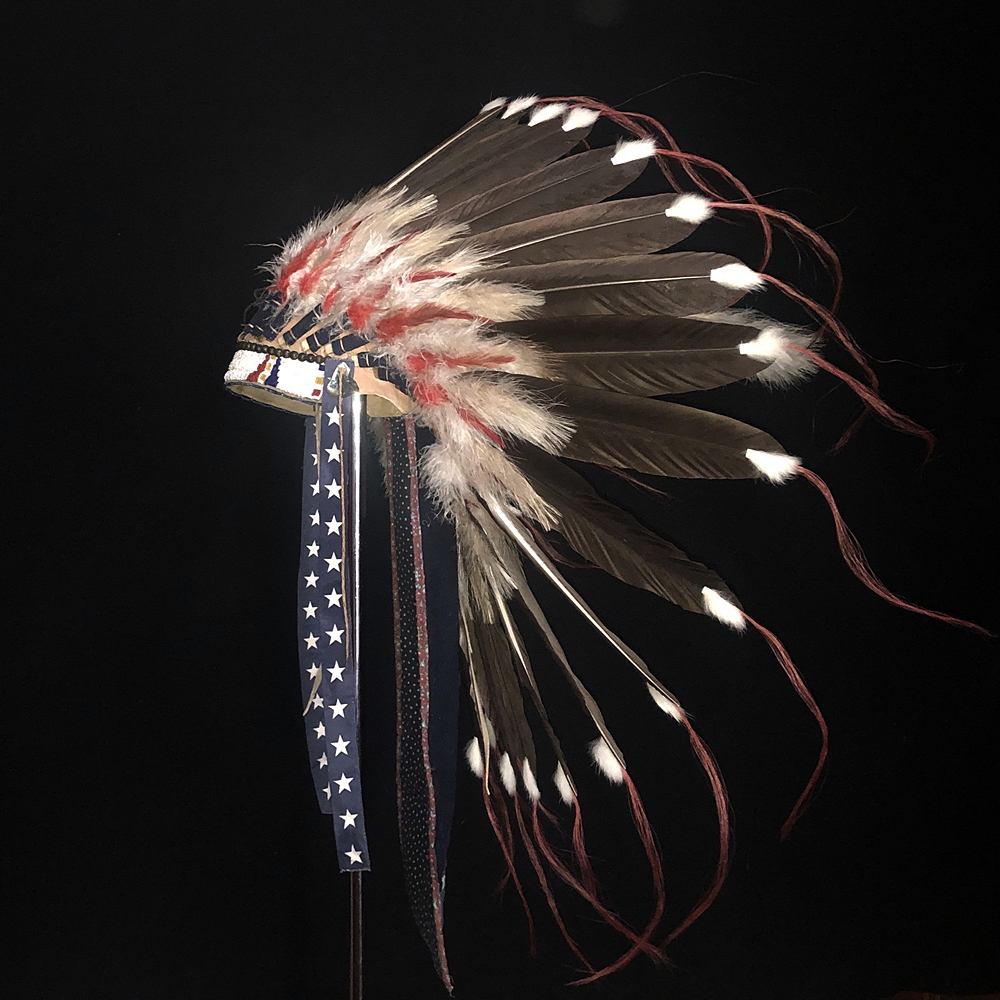
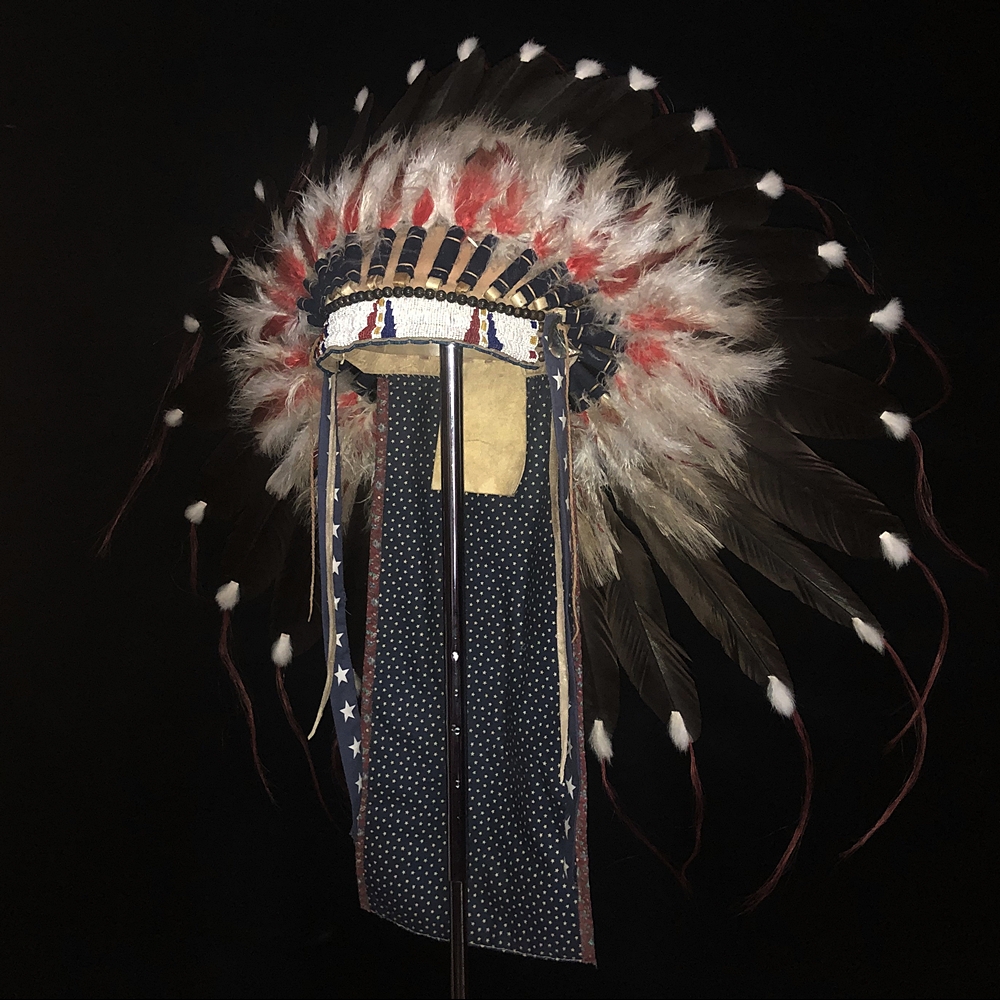
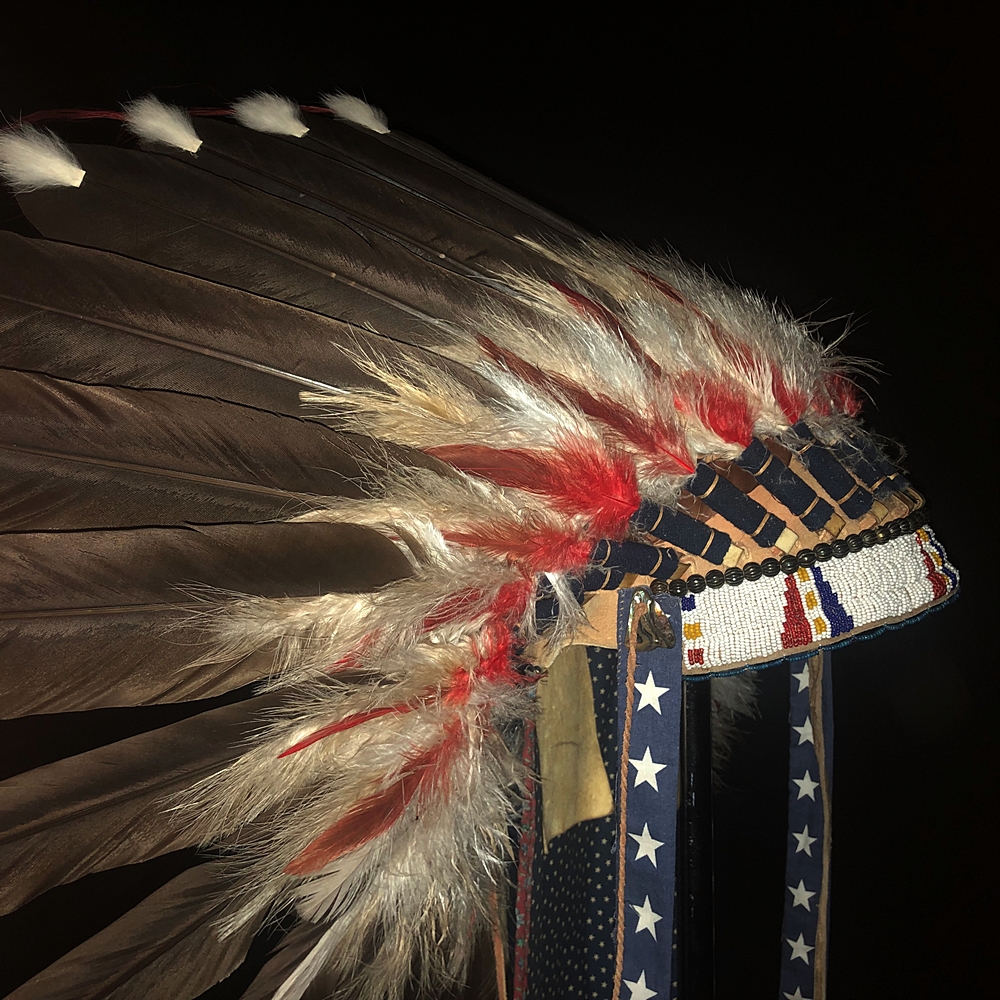
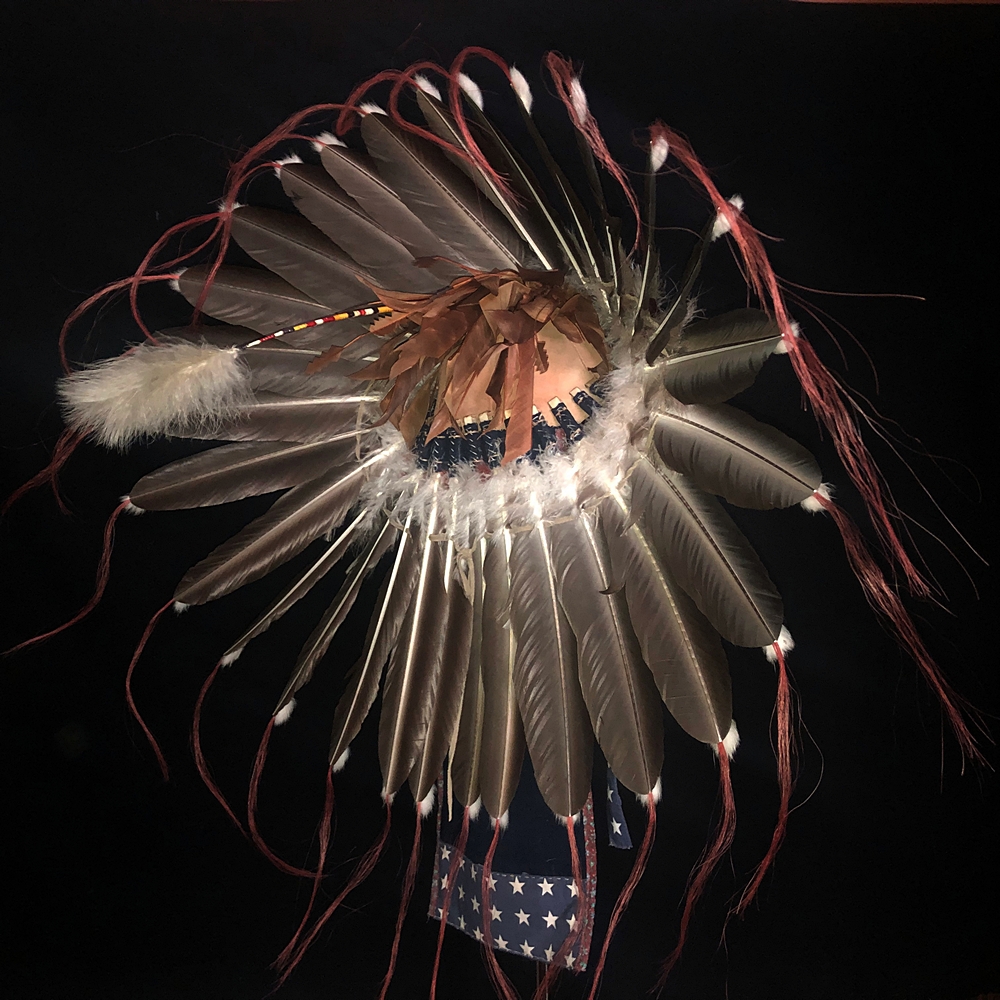
An authentic reproduction of a turn-of-the-century Cheyenne war bonnet, handcrafted by me in 2021. This halo-style headdress features a crown of 28 vulture feathers paired with a short blue trade-cloth trailer decorated with white stars, reflecting the austere warrior aesthetics of the Southern and Northern Plains. In creating this piece, I relied on archival specimens, selecting rare, historically accurate materials and focusing on the natural harmony of their textures—entirely free from modern commercial imitations or souvenir-grade substitutes. A delicate, multi-stage distressing process lends the regalia the surface patina and character of an original turn-of-the-century museum artifact. Should an interested collector wish to acquire it by chance, I would consider parting with this piece strictly at the listed price, which represents a fair minimum valuation for such a work.
Work Grade:Commercial Replica
Availability:
In stock
Поделиться ссылкой |
Description
Details
My sidenotes
Leave / Read comment
Handmade from 28 carefully selected 14" vulture feathersIn Cheyenne culture vulture aka moxtavovetas is connected with death, twilight, and the west (Moore, J. 1986:182). Vultures are acknowledged symbolically in the Sun Dance as one of the holy birds. (secondaries, known in Cheyenne as moxtavovetas). The feather quills are reinforced with stiff rawhide«Rawhide» is a traditional, un-tanned animal hide that has been de-haired, scraped, and dried under tension, serving as a primary structural material in Plains Indian material culture. Renowned for its exceptional rigidity when dry and extreme flexibility when wet, rawhide was extensively utilized for making shield covers, parfleches, container boxes, and structural reinforcing loops for feathered war bonnets. loops, wrapped with blue trade cloth
Clarification for the Uninitiated:
Whenever I mention that a component or item is made with 100% wool cloth, I mean an authentic reproduction of pure English wool white-selvedge broadcloth, traded to Indigenous peoples since the 17th century. To be clear, this is not modern army uniform cloth or cheap, polyester-laced junk dyed with synthetic chemicals that is sold everywhere. It is an expensive, scarce textile with a very specific historical weave, colored strictly with natural dyes.
It is not produced in Russia and can only be tracked down through two or three specialized reenactor sources in the US and Western Europe. At times, it disappears from the market completely for years, and under current circumstances, sourcing it has become virtually impossible. Moreover, I never use this wool in its pristine, off-the-roll state—I subject it to a long, painstaking distressing process to bring out its underlying weave, so that the finished regalia mirrors a genuine 19th-century museum specimen.
patches ("firecrackers"), and attached to the skull cap with buckskin thongs. Each feather is dressed with white base fluffs and red hackles, with ermine spots and red-dyed horsehair glued to the tips.
The inner skull cap is sewn from brain tanned deer and elk hides and reinforced with an outer cap of brain-tanned hide painted with red mineral pigment. The browband is executed in lazy-stitch seed beadwork, featuring traditional Cheyenne red-and-blue stepped triangles bisected by a yellow track line on a white background, bordered along the top by a row of strung hollow brass beads. Each side of the browband is adorned with a trapezoidal green abalone medallion and a cotton streamer patterned with white stars.
At the crown is a cluster of cut and stripped red-dyed feathers, surmounted by a main plume wrapped in alternating bands of red, yellow, blue, and undyed porcupine quills and tipped with a bundle of white fluffs. Extending from the back is a short, 19" blue cloth trailer backed with red calico and terminating in a cotton panel featuring the same white star motif as the side streamers.
The entire war bonnet has undergone a multi-stage aging and patination process to replicate the natural surface wear of a period specimen.
Cheyenne war bonnets featuring a short trade-cloth trailer and white star motifs represent one of the most distinctive forms of Plains warrior regalia from the turn of the 20th century. The use of vulture feathers (moxtavovetas) rather than golden eagle tail feathers carried specific ceremonial and symbolic significance in Cheyenne military traditions and directly reflects documented historical prototypes of the period.
Every structural detail—from rawhide quill reinforcements and sinew sewing to the mineral pigment and surface patination—is the result of specialized ethno-historical research and traditional handwork aimed at producing an accurate study-grade reconstruction.
You May Also Like:
No documents found.
Funny thing is that this year 348 gawkers aimlessly stared at this namerican beauty “War Bonnet with a cloth trailer”, couldn't bring themselves to buy this Native American piece, and didn't even like, share, bookmark, or leave a single comment!!!
It is forbidden to copy and / or otherwise use content from the «War Bonnet with a cloth trailer» without a direct active and indexed hyperlink to the original in the form: "Source: Maza Sapa's Gallery of Plains Indian Warrior Art — https://en.4colors.ru/nam3011.html".
War Bonnet with a cloth trailer 3011.21.01 (photo 1) ☩ «4 Colors»™