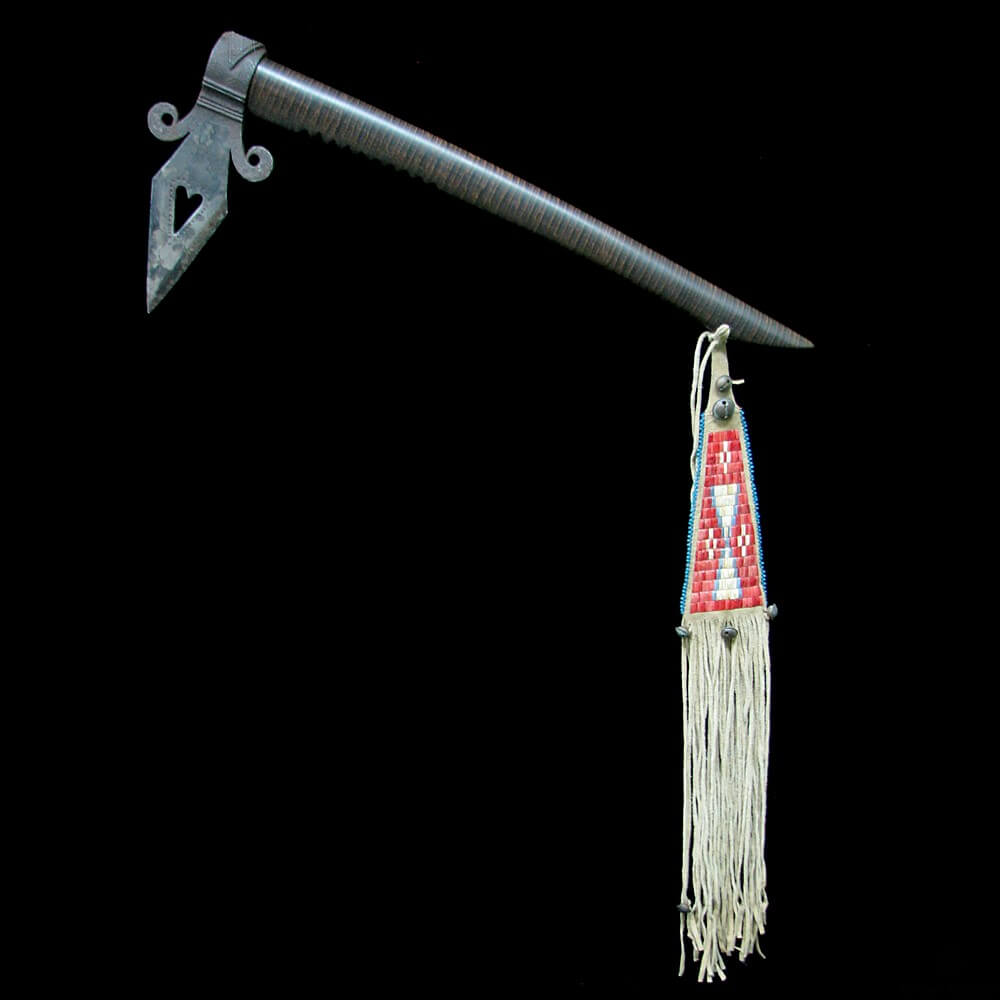
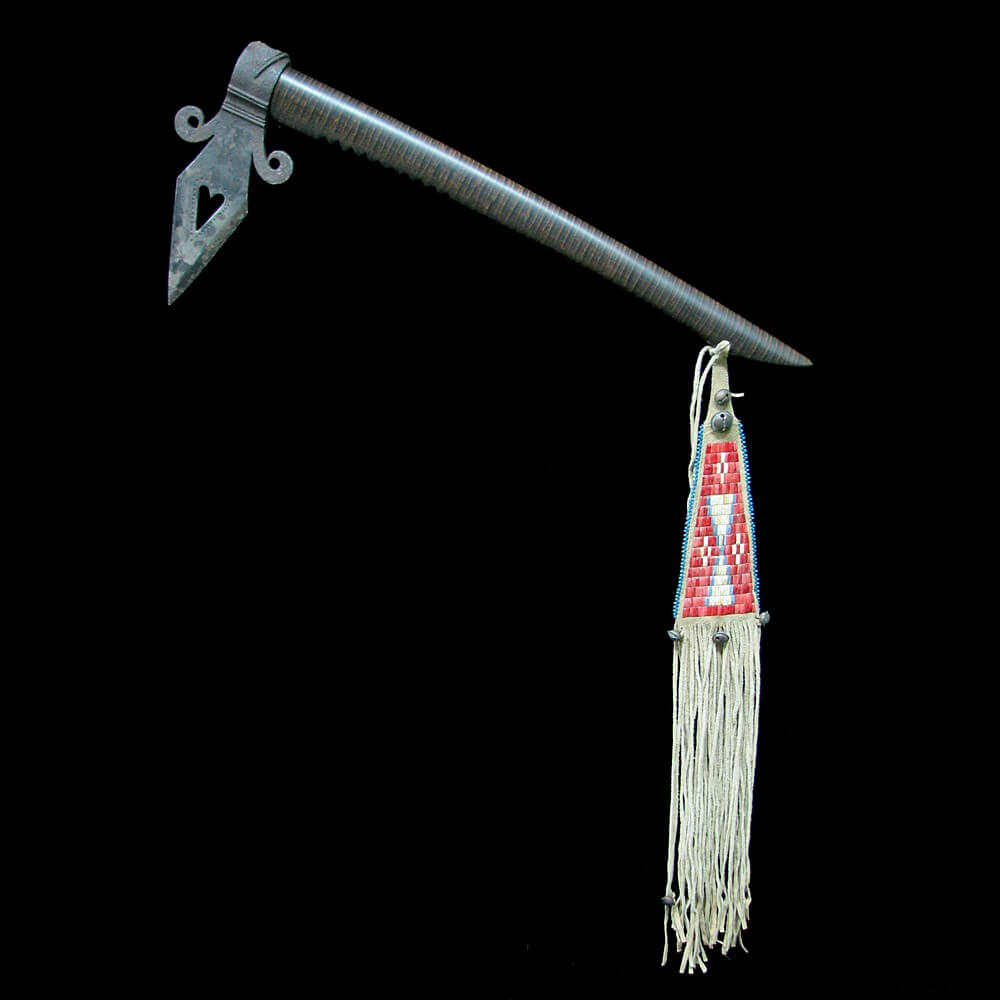
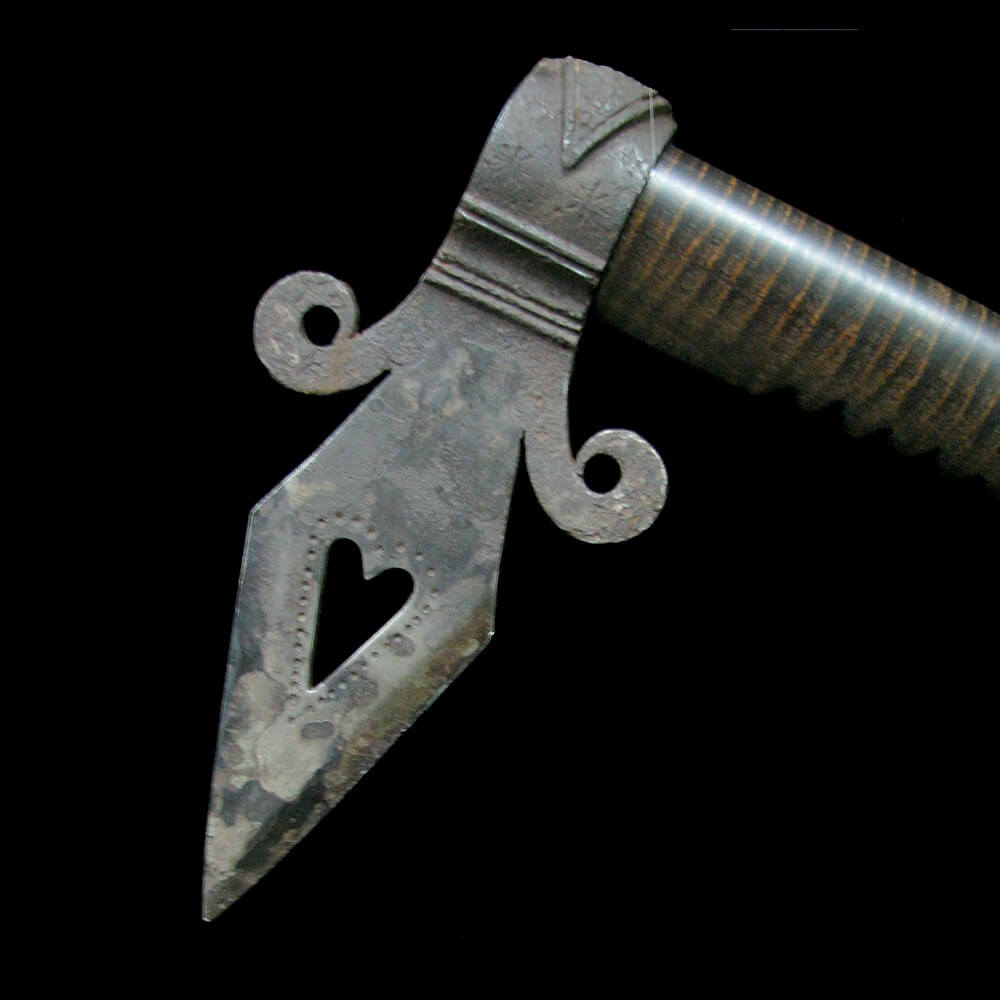
The blade, or head, on the above example was purchased from the first owner in it's present condition and is of unknown age and origin. It is said that it was originally a pipe spontoon, but the pipe bowl was broken off at some point prior to coming into his and my possession.
The handle is hand-carved from very highly figured curly maple, and stained with aqua fortis, a nitric acid based stain used by gunsmiths since the 1700s. The head is 9 inches long, and the handle is 21 inches. A very elegant piece.
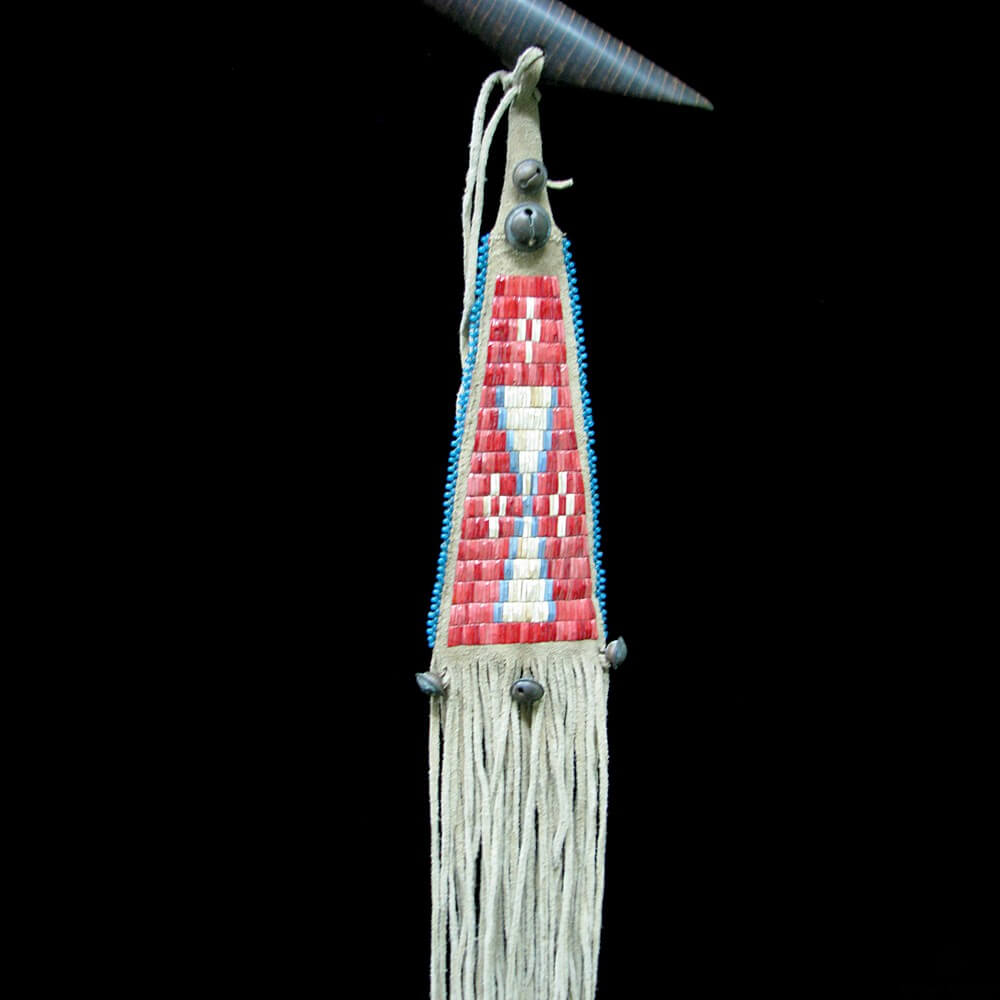
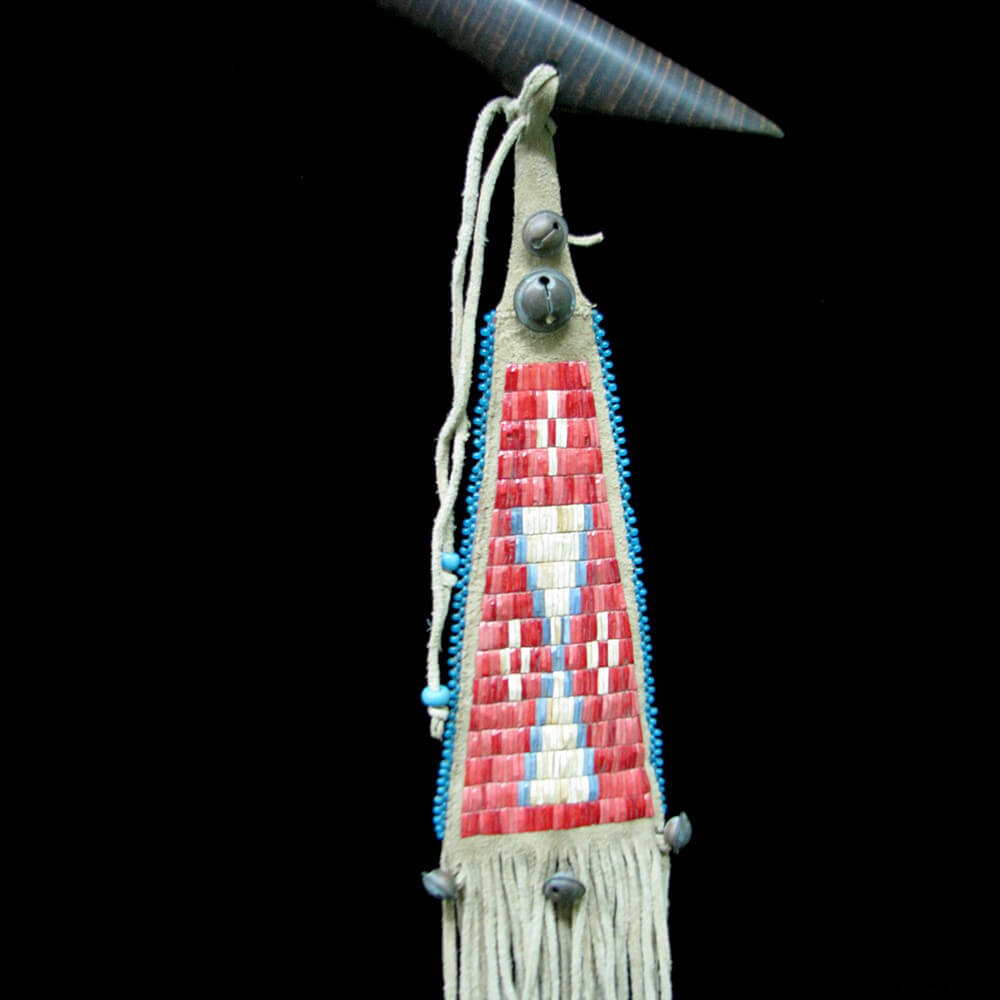
The triangular shaped pendant of braintan leather is quilled in white stepped triangles with blue borders against the red background and edge-beaded with light blue pound (pony) beadsтермин "бисер" относится к бусинам менее 2 мм в диаметре. Исторический термин «пони бисер» относится к бисеру от 2 до 4 мм в диаметре, но в магазинах ,пони бисером, как правило называют бисер гораздо большего размера. Исторический "пони бисер " соответствуют по размерам современным от 6-го до 10 размера бисера. (2-4 мм в диаметре). В масштабных фотографиях (которых у меня нет), пони бисер из Форт-Джордж и Бойер, наиболее соответствуют современному 6-му размеру бисера(диаметром 4 мм).. Long plain hide fringe, five brass hawk bellsTraditional spherical sheet-metal bells (hawk bells), a staple item of the North American fur trade extensively used by Plains and Plateau tribes to adorn warrior regalia, garments, and horse gear., and blue padre beadsPadre beads (Peking glass). Highly prized during the fur trade era, these glass beads were produced in China beginning in the Qing dynasty. From the 1640s through the early 1900s, they were traded along the Chinese frontier and subsequently supplied by European merchants for trade with Native Americans. Across the American Southwest, Pacific Northwest, and Alaska, they became known as "Padre beads"—a name derived from the rosaries worn by Spanish priests—and were also referred to as "chief beads." While turquoise-blue was the most sought-after color, they were also produced in red, white, black, yellow, clear, and cobalt blue, in various sizes, with later European manufacturers also producing their own versions. finish the ornament. The hide is backed with red calico.
A museum-grade reproduction of a spontoon-bladed tomahawk acquired from Western artist James Burton at Kicking Wolf Gallery, fitted with a late 19th-century Central Plains style quilled pendant handcrafted by the prominent German Plains artist Norbert Kohlruss at Travels Far Trading.
Structural layout and material composition:
• Spontoon Head: The iron blade (9 inches long) was acquired by the maker from its previous owner in its current condition and is of unknown age and origin. According to its provenance, it was originally forged as a pipe-tomahawk, though the pipe bowl had been broken off prior to entering the artist's hands.
• Curly Maple Haft: The 21-inch handle is hand-carved from highly figured curly maple and stained with aqua fortis—a traditional nitric acid-based reagent used by American gunsmiths since the 1700s to bring out the wood's deep tiger-stripe grain.
• Quilled & Beaded Pendant: The triangular pendant of brain-tanned deer leather is embroidered in porcupine quills featuring white stepped triangles with blue borders set against a red background, edge-beaded with light blue pound (pony) beads, and backed with red calico. Long plain hide fringe, five brass hawk bells, and blue padre beads complete the ornament.